
Woolston Eyes Nature Reserve
An S.S.S.I. Managed by Woolston Eyes Conservation Group
Woolston Eyes Monthly Sightings
2026-02-28
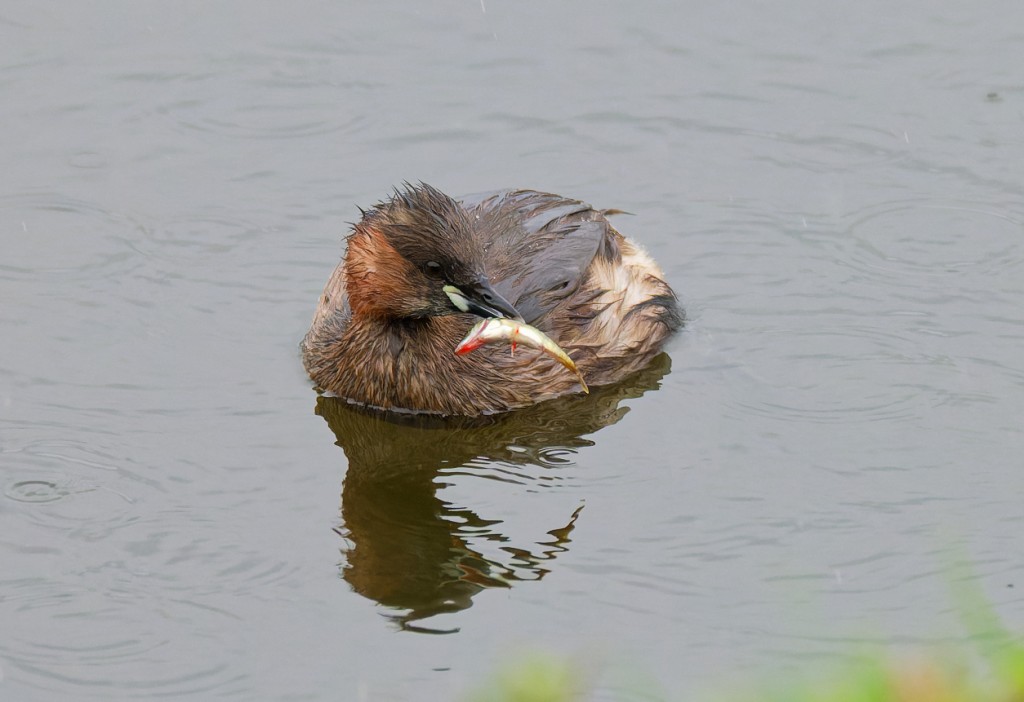
Spring came early this morning, despite the grey skies and threat of heavy rain. The warm weather and southerly winds towards the end of the week always promised to trigger an early movement of migrant species, so we were hopeful when we walked on to No.4 bed shortly after dawn. We didn’t have to wait long either, with a summer-plumage Black-necked Grebe showing immediately from the viewing platform on the west cell, six Sand Martins hawking low over the water and a Chiffchaff in song. Times are certainly changing, as we now expect to see spring migrants before the end of February, rather than towards the middle of March as was traditional. Other sightings on the bed included three Goldeneyes, a flock of 40 Snipe and a male Marsh Harrier. Then it was a dash onto No.3 bed, ahead of the rain, where there was plenty of breeding behaviour, with the four Goldeneyes present including a mating pair, mating Gadwalls and Mallards and a group of 18 Shelducks interacting and displaying. Other sightings included another 12 Snipe and a hunting female Marsh Harrier. All in all, a really excellent morning and spring just a day away. Photo of a Little Grebe with a fish Cheers David Bowman (with Dan Owen, Helen Wynn, Brian Baird and Brian Martin)
Submitted by: David Bowman
2026-02-24
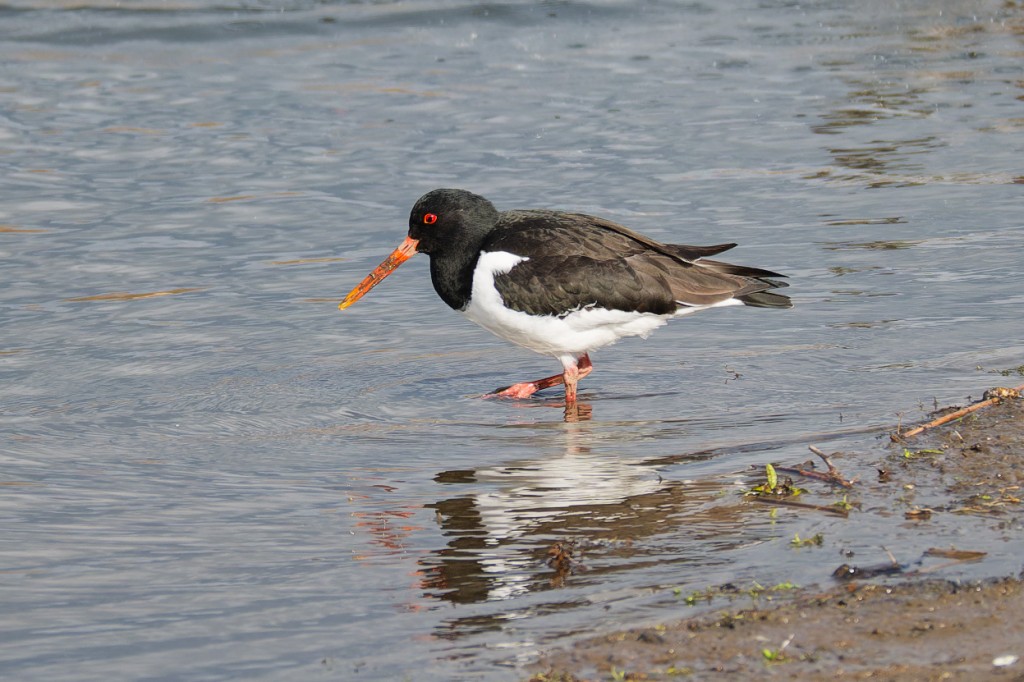
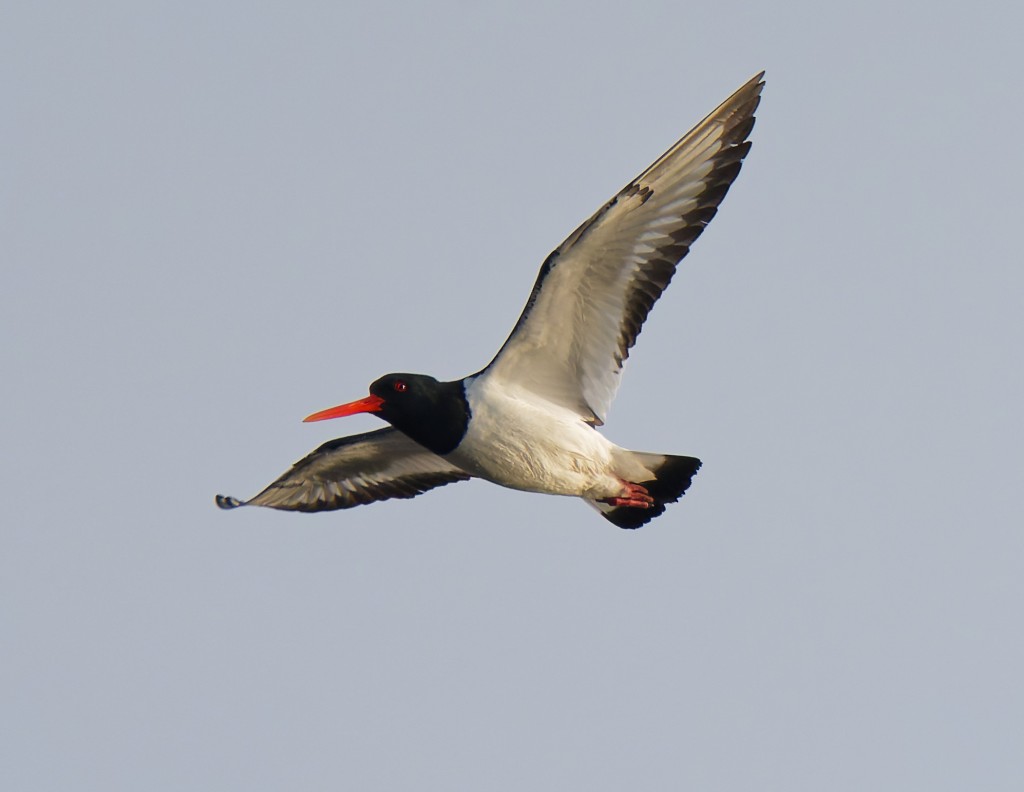
Photo of an Oystercatcher
Cheers David
Submitted by: David Bowman
2026-02-24
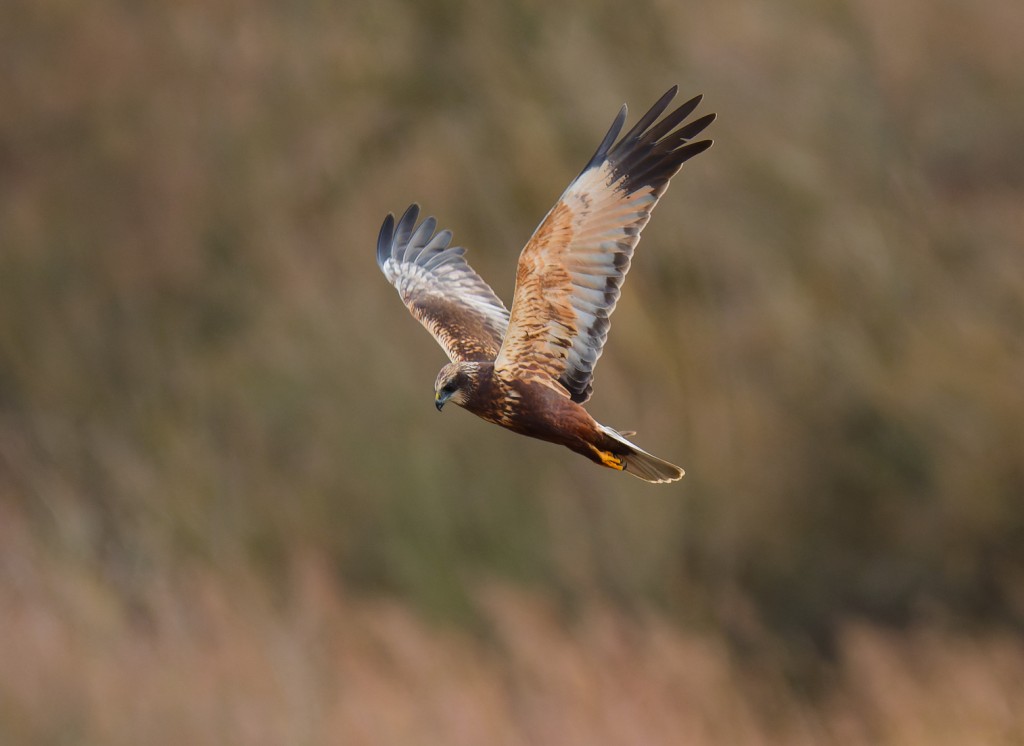
Photo of a male Marsh Harrier
Cheers David
Submitted by: David Bowman
2026-02-24
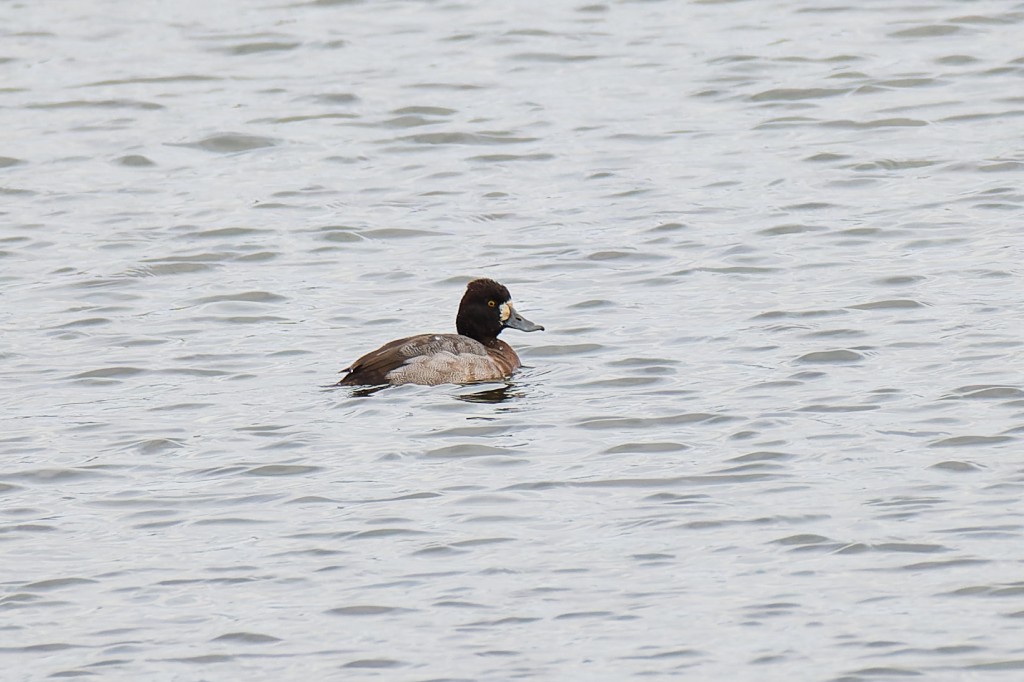
The unseasonally warm weather continued this morning, so it was no surprise when a Pipistrelle bat was reported hawking near the No.3 bed footbridge at lunchtime. The highlight of the morning, though, was the female Lesser Scaup, which has been around for nearly two weeks now. Views have usually been fairly distant on the Ship Canal, so it was nice when Keith Gallie found it looking settled with a handful of Tufted Ducks right in front of the Morgan Hide. Lesser Scaups are a North American species, which breeds on Arctic and sub-Arctic lakes and are a scarce vagrant to the UK. Diving ducks were a feature of the morning, too, as 80 Pochard and 220 Tufted Ducks dropped in mid-morning, though I couldn’t locate the Greater Scaup which has been associating with them, alongside the Lesser Scaup. As usual, we were treated to a lot of active hunting by the resident male Marsh Harrier and it was good to see all the nest rafts, which our wardens and volunteers have recently renovated, so swiftly occupied by Oystercatchers, Lapwings and Black-headed Gulls. Lets hope for a good breeding season! Record shot of the Lesser Scaup Cheers David Bowman (with Keith Gallie, Eva Pyrah and Jasmine Smith)
Submitted by: David Bowman
2026-02-22
The transition to spring-like weather over the past week has produced some interesting sightings, alongside plenty of pre-breeding activity. Early on, No.4 bed produced counts of 13 Oystercatchers and 9 Goldeneyes, which are good by Reserve standards, while Saturday’s Wetland Birds Survey (WeBS) turned up some Reserve scarcities. These included the female Lesser Scaup and female Greater Scaup, both of which have mainly been with the Tufted Duck flock on the Ship Canal for the past week, though the Lesser Scaup has put in a couple of brief appearances on No.3 bed, too. A small movement of Pink-footed Geese on Saturday brought with it a single Bean Goose and two White-fronted Geese, to add to the four White-fronts which flew along the Ship Canal on Tuesday. Saturday’s warm sunshine triggered plenty of courtship behaviour, with displaying Great Crested Grebes and Buzzards, mating Coots and Toads, plus an early flying Peacock butterfly on No.1 bed. Another couple of weeks and, if the weather is kind, we’ll be looking out for an early-returning Sand Martin, which is always, for me, a sign that spring has truly arrived. Photo of an Oystercatcher Cheers David Bowman (with Dan Owen, Helen Wynn and Brian Baird)
Submitted by: David Bowman
2026-02-11
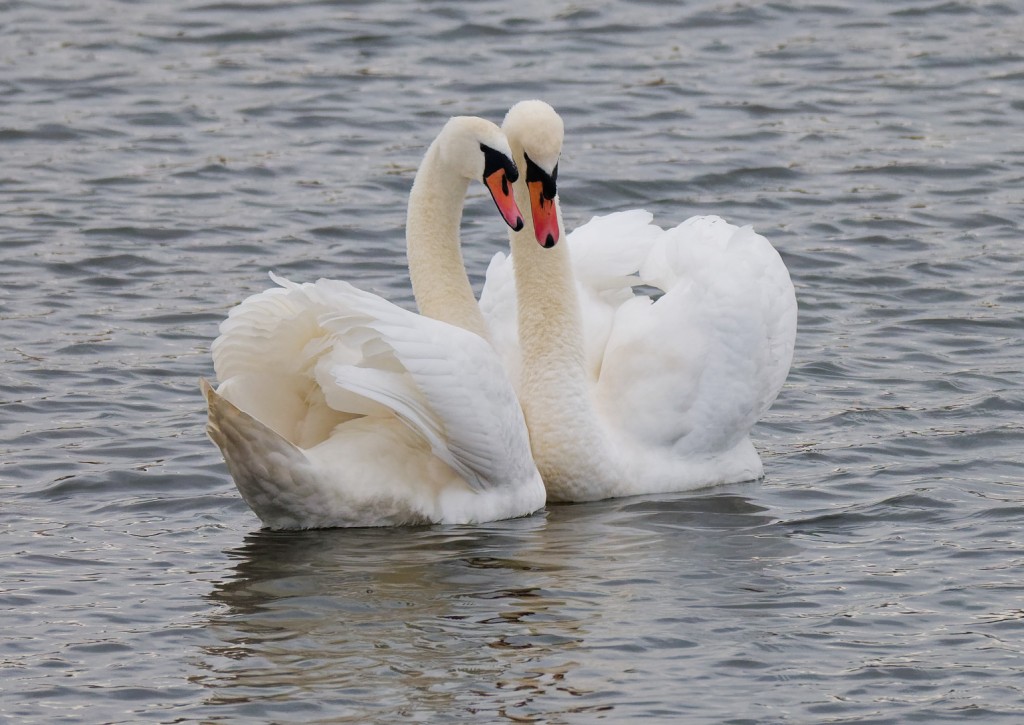
The last week has seen a fair amount of rain, though, with the sun breaking through by mid-morning yesterday it felt like Spring wasn’t too far away. Last Wednesday saw at least 25,000 Starlings still present at the No.3 bed roost, which has been attracting a few hunting raptors. The Barn Owl which was flushed from near the No.3 bed Footbridge on Saturday morning was no doubt brought in by the easy pickings available at the roost. On No.4 bed gulls and Lapwings have started to build up, with the Lapwing flock reaching 1,000 on Saturday, with the nice surprise of five Golden Plovers picked out among them when they were flushed. On the same day, over 300 Black-headed Gulls were present, which are likely to be returning breeding birds. After several disastrous breeding seasons, due to an unholy mix of Avian Flu, Mink predation and human disturbance, we are hopeful that the protective steps we’ve taken about the latter two will lead to a resurgence - unfortunately the impact of Avian Flu is in the lap of the gods. With yesterday’s sunshine there were plenty of birds in song, with Cetti’s Warblers, Willow Tits, Song Thrushes, Robins and Great Tits all adding to the morning’s soundscape. Photo of displaying Mute Swans Cheers David Bowman
Submitted by: David Bowman